







Your Fatigue Has Hidden Roots - with Martha Carlin / Awesome Health Podcast


 Martha Carlin
| Dec 11, 2025 |
podcast
Martha Carlin
| Dec 11, 2025 |
podcast

Fatigue, brain fog, and persistent bloating are common complaints that many people face daily. Yet, the root causes often remain elusive. In a revealing conversation on the Awesome Health Podcast, pioneering microbiome researcher Martha Carlin sheds light on a stealthy driver of chronic inflammation and these symptoms: LPS endotoxins.
What is LPS and Why Does It Matter?
Lipopolysaccharide (LPS) is a component of the outer membrane of gram-negative bacteria, often referred to as endotoxin. When these bacteria die, fragments of LPS are released into the gut. If the gut lining is compromised—a condition known as leaky gut—these endotoxins can enter the bloodstream, triggering chronic low-grade inflammation throughout the body.
Martha explains:
“These endotoxins stimulate the immune system. But what happens over time, the more you're exposed to them, the less your immune system reacts. And so you get this buildup of this debris that your immune system is not recognizing and kicking out, but is causing this low-grade chronic inflammation wherever it has traveled.”
This inflammation can manifest in various ways, from joint pain and arthritis to neurological conditions like Parkinson’s disease. In fact, Martha’s research highlights LPS as a potential primary driver of neuroinflammation in Parkinson’s.
The Gut as the Central Hub of Health
Martha’s journey into microbiome research began with a personal mission after her husband was diagnosed with Parkinson’s. She self-taught chemistry, microbiology, and genetics to understand the gut’s role in whole-body wellness.
She emphasizes the gut’s critical role:
“If you don't have a healthy gut barrier and you don't have a healthy microbiome, what you're eating, you may not be accessing those nutrients. The microbes are stealing it from you or you're unable to break it down into its components.”
This insight underscores why many people suffer from symptoms despite eating well—they may not be absorbing nutrients effectively due to gut dysfunction.
Challenges in Testing and Diagnosis
One of the hurdles in addressing LPS-related inflammation is the difficulty in testing for endotoxin levels. Standard blood tests for LPS are not readily available outside hospital settings, and stool tests vary widely in accuracy due to biases in collection and sequencing methods.
Martha notes:
“I started sequencing my own sample, sending it to three other places, and all four of them had different information. So it’s not a ground truth, but if you’re going to use that as a tool, you should pick a particular kit and stick with it so that you’re comparing apples to apples.”
This variability complicates diagnosis and treatment, especially since many medical professionals lack training in microbiome science.
Practical Steps to Reduce Endotoxin Load and Inflammation
Despite these challenges, Martha offers actionable advice to mitigate LPS endotoxin impact and improve gut health:
- Eliminate processed foods and high sugar diets: Sugar feeds pathogenic bacteria that produce endotoxins.
- Avoid gut-damaging substances: Smoking, antibacterial soaps, certain household cleaners, and some toothpaste ingredients can harm the gut lining.
- Choose organic or chemical-free foods: Be aware of farming practices and pesticide use.
- Filter your water: Public water systems often contain chemicals and contaminants that can disrupt gut health.
- Support gut barrier and microbiome: Use probiotics, digestive enzymes, and minerals like magnesium and humic/fulvic acids to restore gut function.
Martha highlights the importance of minerals:
“We are made of the earth, the trace minerals of the earth. If we’re not getting a sufficient amount of earth in a healthy way, then it’s hard for the body to make the proper components.”
Healing Starts in the Soil
A fascinating aspect of Martha’s work is the connection between soil health, food microbiomes, and human gut health. She and her team developed microbial formulas to restore soil microbiomes, break down harmful chemicals like glyphosate, and improve plant nutrient density.
She reflects:
“Soil degradation, chemical input, and non-restitution of the microbes in the soil end up happening inside our bodies.”
This holistic view reminds us that our health is deeply intertwined with the environment and the food we consume.
The Power of Community and Connection
Beyond diet and supplements, Martha stresses the importance of real human connection and community for gut health:
“The more we’re in contact with diverse people, we share microbes and that increases our diversity.”
She also encourages urban dwellers to engage with local farmers and learn about food sources, fostering a deeper connection to what we eat.
Final Thoughts: Be Your Own Health Advocate
Martha and host Wade Lightheart agree that navigating gut health and chronic inflammation requires self-advocacy and education. Doctors are experts in their fields but may not have all the answers, especially in emerging areas like the microbiome.
Where to Learn More and Take Action
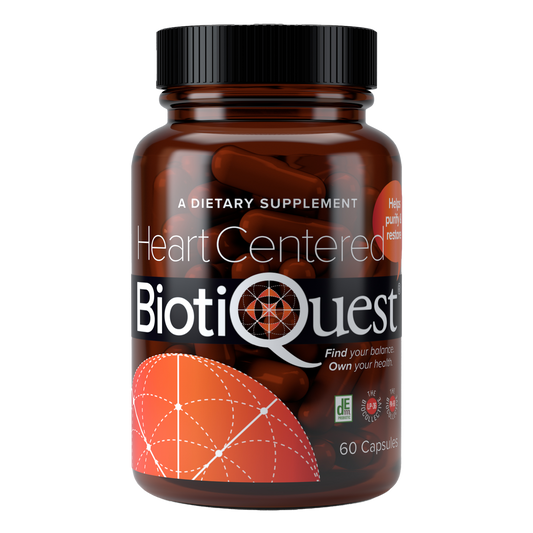
Martha Carlin’s work continues through her probiotics company Bioticquest (bioticquest.com) and her Parkinson’s-focused blog and Substack, Martha’s Quest. For those interested in microbiome testing, she recommends companies like Microbiome Labs and functional medicine practitioners who understand these complex tools.
In summary, LPS endotoxins represent a hidden root of fatigue, brain fog, and chronic inflammation. By understanding the gut’s central role, improving diet and lifestyle, and reconnecting with the environment and community, we can begin to address these underlying issues and reclaim vibrant health.
For more insights, listen to the full Awesome Health Podcast episode with Martha Carlin here.
With gratitude,

 Martha Carlin, is a “Citizen Scientist”,
systems thinker, wife of Parkinson’s warrior, John Carlin, and founder of The BioCollective , a microbiome company expanding
the reach of science and BiotiQuest, the first of it’s kind probiotic line. Since John’s diagnosis in 2002,
Martha began learning the science of agriculture, nutrition, environment, infectious disease, Parkinson’s
pathology and much more. In 2014, when the first research was published showing a connection between the gut
bacteria and the two phenotypes of Parkinson’s, Martha quit her former career as a business turnaround expert
and founded The BioCollective to accelerate the discovery of the impact of gut health on all human disease. Martha was a speaker at the White House 2016 Microbiome Initiative launch, challenging the scientific
community to “think in a broader context”. Her systems thinking background and experience has led to collaborations
across the scientific spectrum from neuroscience to engineering to infectious disease. She is a respected out of the
box problem solver in the microbiome field and brings a unique perspective to helping others understand the
connections from the soil to the food to our guts and our brains.
Martha Carlin, is a “Citizen Scientist”,
systems thinker, wife of Parkinson’s warrior, John Carlin, and founder of The BioCollective , a microbiome company expanding
the reach of science and BiotiQuest, the first of it’s kind probiotic line. Since John’s diagnosis in 2002,
Martha began learning the science of agriculture, nutrition, environment, infectious disease, Parkinson’s
pathology and much more. In 2014, when the first research was published showing a connection between the gut
bacteria and the two phenotypes of Parkinson’s, Martha quit her former career as a business turnaround expert
and founded The BioCollective to accelerate the discovery of the impact of gut health on all human disease. Martha was a speaker at the White House 2016 Microbiome Initiative launch, challenging the scientific
community to “think in a broader context”. Her systems thinking background and experience has led to collaborations
across the scientific spectrum from neuroscience to engineering to infectious disease. She is a respected out of the
box problem solver in the microbiome field and brings a unique perspective to helping others understand the
connections from the soil to the food to our guts and our brains.

Waking Up to a Probiotic Breakfast Can Do Wonders for Your Gut Health
Martha Carlin
| Aug 03, 2022 | 5 minutes read
Did you know that recent studies show people with poor gut diversity had lower quality of life? The health of your microbiome impacts your mental health, sleep, energy, the risk for chronic illnesses, and much more. A probiotic breakfast can...
 gut immunity

Can Probiotic Supplements Make or Break Your Fast?
Martha Carlin
| Dec 14, 2022 | 5 minutes read
Intermittent fasting (IF) may have started as a fitness trend for weight loss, but today it's a go-to lifestyle choice for many. Practicing intermittent fasting has been linked with health benefits such as lowering blood sugar and insulin, preventing heart...
gut immunity


