







Reclaiming Your Biology: The Connected Web of Grief, the Glycocalyx, and Your Internal Ecosystem


 Martha Carlin
| Jun 02, 2026 |
podcast
Martha Carlin
| Jun 02, 2026 |
podcast

A chronic diagnosis is almost always delivered as a final sentence, completely devoid of hope. In the conventional medical model, patients are given a label—whether it’s Parkinson’s, Alzheimer’s, or chronic fatigue—and told, “There is no cure. This is progressive. Take this pill.”
But what if a diagnosis isn’t a sudden failure of your biology? What if it is actually your body’s most honest attempt to protect you after years of whispering for your attention?
On a recent episode of the Wellness Evolution Community podcast, host Dr. Christine Smith sat down with Martha Carlin—a pioneering citizen scientist, business systems expert, and founder of The Bio Collective and BiotiQuest. Following her 44-year-old marathon-running husband John’s Parkinson’s diagnosis in 2002, Martha applied her background as a corporate auditor to examine the human body.
What she uncovered bridges the gap between our life stories and our microscopic physiology, revealing that true healing requires a look at the total toxic burden—both environmental and emotional.
The Body as a Transaction Flow: The Audit of Life
As a corporate auditor, Martha was trained in transaction flow review—a method used to map every single asset, person, and communication channel within a business to find operational risks.
When she turned this analytical lens toward chronic illness, she realized the human body functions the exact same way. It is a highly complex, interconnected network of flow. Modern medicine, however, treats symptoms in isolation.
"Our life story is completely missing from the way we practice modern medicine," Martha explains. By mapping her husband's life, she traced his chronic illness back to variables that conventional doctors ignored: multiple childhood strep infections, teenage antibiotic use for acne, heavy exposure to agricultural chemicals, and deep emotional stressors.
We Are the Minor Partners in Our Own Bodies
To understand how environmental variables alter our health, we first have to understand who is actually running the show inside us.
While the human genome is incredibly slow to adapt evolutionarily, our internal ecosystem changes at lightning speed. We host trillions of bacteria, fungi, and viruses that make up our microbiome. In terms of sheer cell count, we are outnumbered two-to-one, but the real power lies in the genetics.
The microbes living inside us contain 100 to 300 times more genetic information and function than the human genome.
"The microbiome is our primary adaptive system," says Martha. "It is the primary operating system signaling epigenetically to our human genome." This internal pharmacy regulates everything from the bioavailability of the minerals we eat to our brain's literal ability to store long-term memories.
The Microscopic Shield: Understanding the Glycocalyx
When an ecosystem is exposed to a chronic "allostatic load" (the combined weight of physical, chemical, and emotional stressors), the first layer of defense to take a hit is a microscopic structure called the glycocalyx.
Rather than being rigid, static circles like we see in textbooks, our cells are continuous, flexible, fluid structures. Every single cell, blood vessel, the gut lining, and the blood-brain barrier is coated in the glycocalyx—a delicate, sugary, gel-like barrier.
How the Glycocalyx Works:
- The Foundation: It is built upon a basement membrane of hyaluronic acid.
- The "Seaweed" Filter: Extending from this base are tiny, hair-like structures made of sulfated polymers (chondroitin, heparan, and keratan sulfate).
- The Gatekeeper: These hairs carry a heavy negative electrical charge, causing them to stand upright. The channels between them act as a microscopic translation boundary, strategically deciding exactly what nutrients and oxygen get into the cell, and allowing cellular waste and CO2 to escape.
When we experience a high toxic burden, pieces of cellular debris—specifically endotoxins (LPS) from dead gram-negative gut bacteria—get physically trapped in this delicate seaweed layer. This debris disrupts the cell's electrical gradient and sparks severe local inflammation.
If your glycocalyx breaks down in the gut, you experience leaky gut. If it degrades at the blood-brain barrier, it paves the way for neurological decline like Alzheimer's or Parkinson’s.
The Stacked Effect: Why Endurance Athletics Can Damage the Gut
The breakdown of these barriers explains a profound paradox: how highly active, seemingly healthy individuals can develop degenerative diseases. John Carlin was a dedicated marathon runner, a lifestyle choice that Martha notes can inadvertently place massive stress on the gut ecosystem without proper recovery.
During extreme endurance events, the body initiates a survival response:
- Ischemia: Blood supply is radically diverted away from the digestive tract ("rest and digest") and pumped out to the skeletal muscles.
- Reperfusion Injury: The moment the exercise stops, blood rushes back into the starved, tiny capillaries of the gut, causing mechanical stress to the delicate glycocalyx.
- The Sugar/Electrolyte Swing: Classic endurance practices like intensive "carb-loading" dump massive amounts of glucose and fructose into the upper GI tract. This directly feeds opportunistic, endotoxin-producing gram-negative bacteria, resulting in a massive inflammatory spike of LPS right after an athletic event.
Challenging the body through exercise is vital, but without deep, conscious cellular resourcing and recovery, it can slowly erode your internal terrain.
Unseen Forces: Can a Broken Heart Disrupt Your Microbes?
Perhaps the most groundbreaking element of Martha's research is the intersection of emotional trauma and microbial endocrinology.
Microbes have specialized receptors for our stress hormones, including cortisol, adrenaline, and epinephrine. When we experience trauma or chronic emotional suppression, our brain chemistry alters our gut environment. Conversely, a disrupted microbiome continuously sends distress signals back up the vagus nerve to the brain.
Through her work filming a documentary series with the Resolve Parkinson’s Foundation, Martha interviewed dozens of patients about their life timelines. Over and over, a distinct pattern emerged: the clinical onset of their physical symptoms was preceded by a profound, unaddressed emotional wound—the loss of a child, the death of a parent, or the sudden collapse of a business.
"During one interview, looking at everything this gentleman had carried, I told him: 'I feel like part of this is a broken heart.' And he just started crying," Martha shares.
Suppressed grief and fierce self-judgment physically reshape our internal ecosystem. This is why tools like meditation can radically shift the composition of a microbiome in less than a week, independent of any dietary changes—it fundamentally alters the nervous system's tone, allowing the boundaries of the body to relax.
Practical Action: How to Treat Your Gut Like a Ecosystem
To move away from a culture of constantly trying to "kill" the bad microbe or weed, we must focus on supporting a flourishing, balanced community. Here is where Martha suggests directing your attention:
- Microbiome-First Eating: You aren't just feeding yourself; you are a walking coral reef. Transition away from fermentable sugars (glucose and fructose) that feed pathogens in the upper GI tract, and introduce nutrient-dense foods like bone broth, which supply the raw hyaluronic acid needed to rebuild a damaged glycocalyx.
- Filter and Remineralize Your Water: Modern water infrastructure filters out pathogens but leaves behind a chemical soup of environmental runoff and pharmaceutical residues. Utilize robust water filtration, but remember that clean filters strip out essential trace minerals. You must add humic and fulvic minerals back to your drinking water to fuel your body's cellular enzymes.
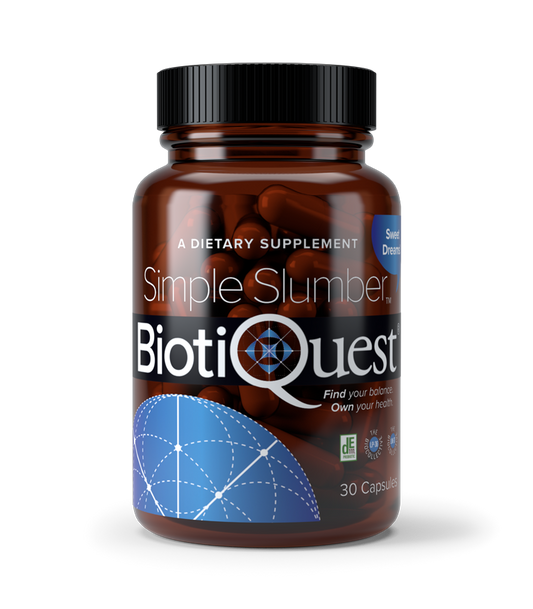
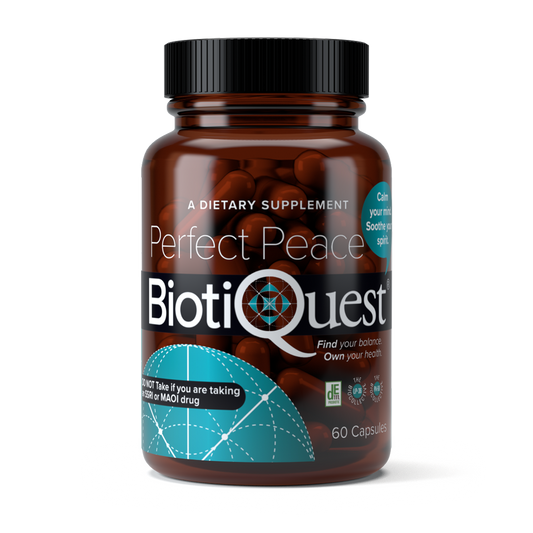
- Support Microbes as a Team: Avoid single-strain probiotic megadoses, which can make the gut overly acidic or throw off balance. Instead, utilize computationally modeled "guilds"—microbial teams that cross-feed each other. For example, BiotiQuest’s Simple Slumber uses a team that naturally synthesizes bacterial melatonin, while Perfect Peace is formulated to naturally elevate GABA levels to calm an overactive stress response within 20 minutes.
- Prioritize Your Story: Step back and recognize yourself as a whole, continuous person. The words you accept, the diagnoses you choose to identify with, and the emotional weights you carry are actively processing through your biology. Reclaiming your health sovereignty starts with prioritizing your own recovery.
To explore Martha Carlin’s computationally modeled probiotic formulations, visit BiotiQuest. To read more about her personal journey and her deep dive into environmental science, check out her books, "My Search for the Perfect Poop" and "Connected: Love, Loss, and the Unseen Forces Behind Chronic Disease," or subscribe to her Substack, Martha’s Quest.
With gratitude,

 Martha Carlin, is a “Citizen Scientist”,
systems thinker, wife of Parkinson’s warrior, John Carlin, and founder of The BioCollective , a microbiome company expanding
the reach of science and BiotiQuest, the first of it’s kind probiotic line. Since John’s diagnosis in 2002,
Martha began learning the science of agriculture, nutrition, environment, infectious disease, Parkinson’s
pathology and much more. In 2014, when the first research was published showing a connection between the gut
bacteria and the two phenotypes of Parkinson’s, Martha quit her former career as a business turnaround expert
and founded The BioCollective to accelerate the discovery of the impact of gut health on all human disease. Martha was a speaker at the White House 2016 Microbiome Initiative launch, challenging the scientific
community to “think in a broader context”. Her systems thinking background and experience has led to collaborations
across the scientific spectrum from neuroscience to engineering to infectious disease. She is a respected out of the
box problem solver in the microbiome field and brings a unique perspective to helping others understand the
connections from the soil to the food to our guts and our brains.
Martha Carlin, is a “Citizen Scientist”,
systems thinker, wife of Parkinson’s warrior, John Carlin, and founder of The BioCollective , a microbiome company expanding
the reach of science and BiotiQuest, the first of it’s kind probiotic line. Since John’s diagnosis in 2002,
Martha began learning the science of agriculture, nutrition, environment, infectious disease, Parkinson’s
pathology and much more. In 2014, when the first research was published showing a connection between the gut
bacteria and the two phenotypes of Parkinson’s, Martha quit her former career as a business turnaround expert
and founded The BioCollective to accelerate the discovery of the impact of gut health on all human disease. Martha was a speaker at the White House 2016 Microbiome Initiative launch, challenging the scientific
community to “think in a broader context”. Her systems thinking background and experience has led to collaborations
across the scientific spectrum from neuroscience to engineering to infectious disease. She is a respected out of the
box problem solver in the microbiome field and brings a unique perspective to helping others understand the
connections from the soil to the food to our guts and our brains.

Waking Up to a Probiotic Breakfast Can Do Wonders for Your Gut Health
Martha Carlin
| Aug 03, 2022 | 5 minutes read
Did you know that recent studies show people with poor gut diversity had lower quality of life? The health of your microbiome impacts your mental health, sleep, energy, the risk for chronic illnesses, and much more. A probiotic breakfast can...
 gut immunity

Can Probiotic Supplements Make or Break Your Fast?
Martha Carlin
| Dec 14, 2022 | 5 minutes read
Intermittent fasting (IF) may have started as a fitness trend for weight loss, but today it's a go-to lifestyle choice for many. Practicing intermittent fasting has been linked with health benefits such as lowering blood sugar and insulin, preventing heart...
gut immunity


