









Reclaiming Your Agency: Why Chronic Disease is a Whole-System Story


 Martha Carlin
| Jun 28, 2026 |
podcast
Martha Carlin
| Jun 28, 2026 |
podcast

For decades, the modern medical system has treated chronic illness like a series of isolated brushfires. You get a diagnosis here, a symptom there, and a prescription to patch it up. But what if the real issue isn't the specific name of the disease, but our fundamental failure to look at the body as a whole ecosystem?
In a striking episode of Sound Health Radio, host Richard (TalkToMeGuy) sat down with Martha Carlin, founder of BiotiQuest and author of the new book Connected: Love, Loss, and the Unforeseen Forces Behind Chronic Disease.
Martha’s journey didn’t begin in a lab; it began in 2002 when her husband, John, was diagnosed with early-onset Parkinson’s disease at just 44 years old. Refusing to accept a bleak, passive prognosis, Martha applied her background as a systems auditor to the human body.
What she uncovered over a 24-year quest is a radical rethinking of longevity, environmental toxicity, and the microscopic "factory" that keeps us alive.
You Are a Walking Ecosystem
To understand chronic illness, you first have to understand what you're actually made of. As Martha points out, a simple look in the mirror is deceiving.
"Most of the solid matter by a ratio of two to one is microbes," Martha explains. "But the even more surprising piece of it is in the genome. The microbes inside us have anywhere from 100 to 300 times more genes than our human genome."
These microbes aren't passive hitchhikers—they are the ultimate workhorses of your body. They process waste, recycle nutrients, and serve as your internal pharmaceutical plant, manufacturing essential vitamins, hormones, and calming neurotransmitters.
When this ecosystem is thriving, your body naturally maintains equilibrium. But when it is compromised, the entire system begins to fail.
The True Cost of a Sterile World
Why is our internal factory shutting down? Martha points directly to the hygiene hypothesis and modern agricultural practices.
In our obsession with cleanliness—wiping down every surface with harsh chemicals and staying isolated indoors—we have stopped exposing our immune systems to the diverse environmental microbes they need to train properly.
Combine this sterile lifestyle with an industrial food supply heavy in processed soy, simple sugars, and crops heavily treated with agricultural chemicals like glyphosate, and you get a recipe for systemic collapse.
Martha’s research even revealed that marker genes from genetic engineering are showing up directly in human microbiomes. Our bodies are recording a "general ledger" of every toxin we encounter, and eventually, that total toxic burden breaks the system.
The Breakthrough: Putting the Microbial Teams Back to Work
When John’s Parkinson’s symptoms began progressing, Martha attended the World Parkinson’s Congress and learned about research showing that a sugar alcohol called mannitol could stop toxic proteins from clumping together in the brain.
Discovering that specific, ancestral strains of bacteria naturally ferment mannitol out of glucose and fructose, Martha asked a simple, system-level question: Can we build a team of microbes to put that factory back into the gut?
Working with a pioneer fermentation chemist, she created a prototype formula targeting the small intestine's sugar footprint.
The impact was undeniable. Within 30 days of taking the microbial team, John put down the cane he had been using to walk. Four months later, he was easily navigating a graduation crowd of 5,000 people. His clinical Parkinson’s rating score improved by an astonishing 40%.
That foundational team became Sugar Shift, a formula engineered not as a single-supplement patch, but as a synchronized guild of bacterial strains that work together to balance your body's metabolism and cool systemic inflammation.
Take Back Your Agency
The core message of Martha’s work and her book, Connected, is a call to action for anyone facing a chronic diagnosis: Do not give away your agency to a broken paradigm.
"A diagnosis of Parkinson’s does not mean your life is over," Martha says. Together, she and John climbed Mount Kilimanjaro, tackled peaks in Colorado, and lived a deeply adventurous life by choosing to focus on daily health optimization rather than waiting for the end.
True recovery requires doing the hard work—stepping away from the ultra-processed, sugar-laden traps of the modern diet, seeking out real food from local farmers who live in the dirt, and actively rebuilding your body's microbial foundations. Given the right tools and the right team, your body has an extraordinary capacity to look after itself.
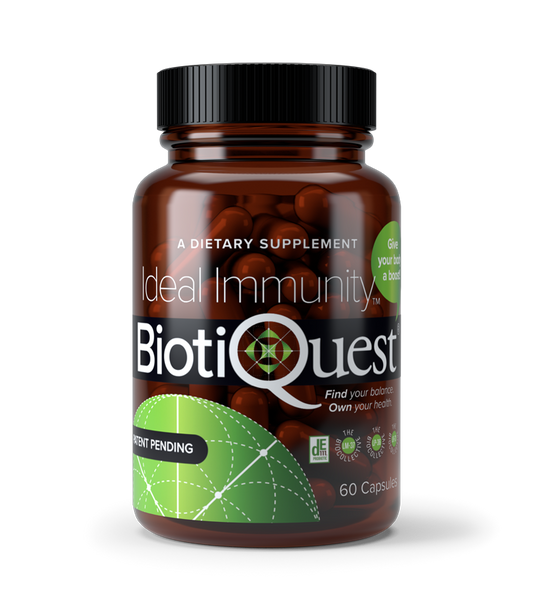
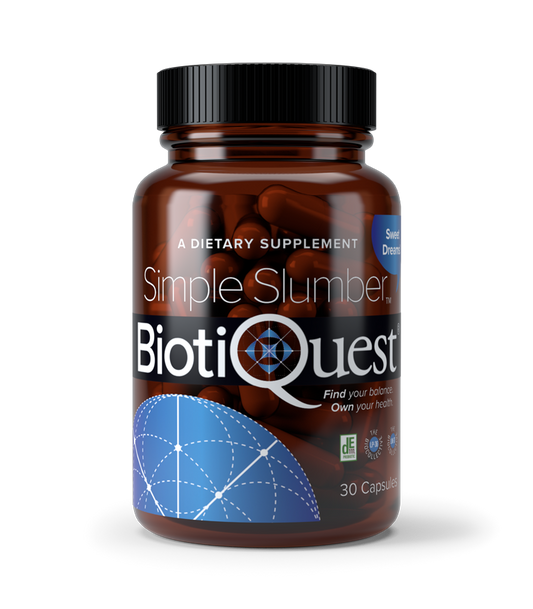
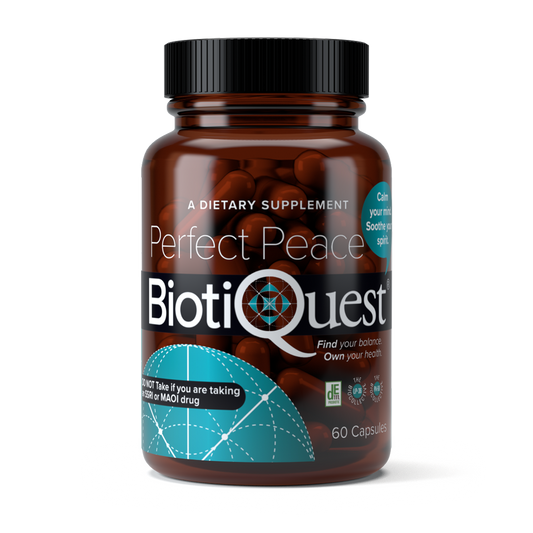
Martha Carlin’s new book, Connected: Love, Loss, and the Unforeseen Forces Behind Chronic Disease, is available online at Amazon, Barnes & Noble, and Bookshop. To learn more about her targeted probiotic formulas, visit BiotiQuest.
With gratitude,

 Martha Carlin, is a “Citizen Scientist”,
systems thinker, wife of Parkinson’s warrior, John Carlin, and founder of The BioCollective , a microbiome company expanding
the reach of science and BiotiQuest, the first of it’s kind probiotic line. Since John’s diagnosis in 2002,
Martha began learning the science of agriculture, nutrition, environment, infectious disease, Parkinson’s
pathology and much more. In 2014, when the first research was published showing a connection between the gut
bacteria and the two phenotypes of Parkinson’s, Martha quit her former career as a business turnaround expert
and founded The BioCollective to accelerate the discovery of the impact of gut health on all human disease. Martha was a speaker at the White House 2016 Microbiome Initiative launch, challenging the scientific
community to “think in a broader context”. Her systems thinking background and experience has led to collaborations
across the scientific spectrum from neuroscience to engineering to infectious disease. She is a respected out of the
box problem solver in the microbiome field and brings a unique perspective to helping others understand the
connections from the soil to the food to our guts and our brains.
Martha Carlin, is a “Citizen Scientist”,
systems thinker, wife of Parkinson’s warrior, John Carlin, and founder of The BioCollective , a microbiome company expanding
the reach of science and BiotiQuest, the first of it’s kind probiotic line. Since John’s diagnosis in 2002,
Martha began learning the science of agriculture, nutrition, environment, infectious disease, Parkinson’s
pathology and much more. In 2014, when the first research was published showing a connection between the gut
bacteria and the two phenotypes of Parkinson’s, Martha quit her former career as a business turnaround expert
and founded The BioCollective to accelerate the discovery of the impact of gut health on all human disease. Martha was a speaker at the White House 2016 Microbiome Initiative launch, challenging the scientific
community to “think in a broader context”. Her systems thinking background and experience has led to collaborations
across the scientific spectrum from neuroscience to engineering to infectious disease. She is a respected out of the
box problem solver in the microbiome field and brings a unique perspective to helping others understand the
connections from the soil to the food to our guts and our brains.


Waking Up to a Probiotic Breakfast Can Do Wonders for Your Gut Health
Martha Carlin
| Aug 03, 2022 | 5 minutes read
Did you know that recent studies show people with poor gut diversity had lower quality of life? The health of your microbiome impacts your mental health, sleep, energy, the risk for chronic illnesses, and much more. A probiotic breakfast can...
 gut immunity

Can Probiotic Supplements Make or Break Your Fast?
Martha Carlin
| Dec 14, 2022 | 5 minutes read
Intermittent fasting (IF) may have started as a fitness trend for weight loss, but today it's a go-to lifestyle choice for many. Practicing intermittent fasting has been linked with health benefits such as lowering blood sugar and insulin, preventing heart...
gut immunity


