








Microbiome, Parkinson’s, Systemic Healing and the Power of Citizen Science with Martha Carlin


 Martha Carlin
| Aug 28, 2025 |
podcast
Martha Carlin
| Aug 28, 2025 |
podcast

In a deeply moving and scientifically rich conversation on the Superhumanize podcast, Martha Carlin, citizen scientist and founder of BiotiQuest, shares her transformative journey sparked by her husband John’s Parkinson’s diagnosis in 2002. What began as a personal caregiving challenge evolved into a pioneering exploration of the gut microbiome’s profound influence on neurodegeneration and chronic illness.
From Caregiver to Citizen Scientist: A Systems Approach
Martha’s background as an auditor and systems thinker shaped her unique research path. Rather than accepting the conventional prognosis, she dove into mapping the complex interactions within the body, focusing initially on food and environmental toxins. She recalls:
> “I took it on as a problem with my systems background... I just really never stopped from there.”
Her investigation led her to the microbiome — the trillions of bacteria, fungi, and viruses living in and on our bodies — which she calls the “general ledger of the body.” This internal ecosystem, comprising roughly two microbial cells for every human cell, acts as an operating system influencing health and disease.
The Hidden Impact of Organophosphates and Environmental Toxins
One of Martha’s most profound insights is the role of organophosphates, such as glyphosate, in disrupting this delicate microbial balance. These neurotoxic chemicals target pathways present in plants and bacteria but absent in humans, yet their widespread use has cascading effects on human health:
> “We’re poisoning ourselves with a neurotoxin... The rise in Parkinson’s is a pretty good indicator of this toxic burden.”
She emphasizes that if she could wave a magic wand, eliminating organophosphates would be her top priority, closely followed by addressing the disruptive effects of electromagnetic fields on microbial communication — a phenomenon known as quorum sensing.
Gut Health as a Diagnostic and Therapeutic Frontier
Martha highlights the diagnostic power of stool samples, which reveal not only microbial species but also functional genes, including those producing endotoxins. Endotoxins, primarily from gram-negative bacteria, are highly inflammatory and have been shown in over 500 animal studies to induce Parkinson’s-like symptoms. She urges greater clinical attention to this connection:
> “People should get familiar with endotoxin because it’s likely one of the big drivers of many of our chronic diseases.”
The Gut-Brain-Emotion Connection
Beyond biological toxins, Martha explores how emotional trauma, grief, and even ancestral memory may be “held” in the gut, influencing disease progression. She notes the common pattern of chronic constipation in Parkinson’s patients as a physical manifestation of emotional holding:
> “The body starts to hold things... I think we could turn back people who might have gotten Parkinson’s otherwise from ever getting it.”
This holistic perspective aligns with emerging models of care that integrate emotional and somatic therapies alongside physical treatments.
Mitochondrial Health, Light Therapy, and Innovative Probiotics
Martha also discusses the interplay between gut health and mitochondrial function, noting that nutrient uptake is often impaired in chronic illness. She is a proponent of red light therapy and intermittent fasting as ways to support mitochondrial resilience.
Her research culminated in the development of *Sugar Shift*, a patented probiotic designed to convert excess glucose and fructose into mannitol — a sugar alcohol with antioxidant properties shown to reduce protein aggregation in Parkinson’s. Clinical trials in diabetic cohorts demonstrated significant reductions in endotoxin levels and improved metabolic markers, underscoring the probiotic’s systemic benefits.
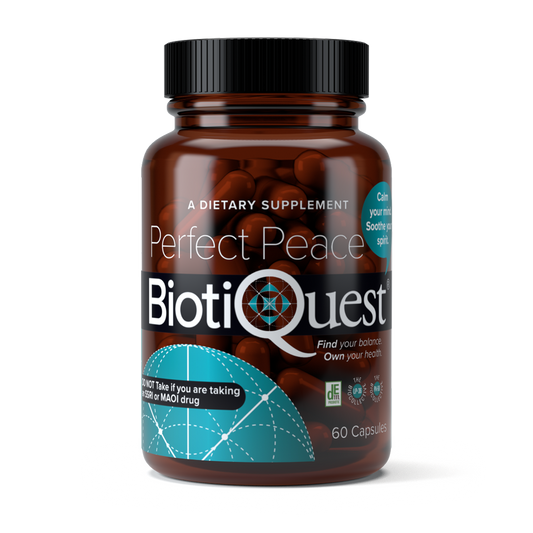
Additionally, her *Perfect Peace* probiotic supports GABA production to help manage stress and anxiety, with users reporting rapid calming effects even under travel-related stress.
A Message of Hope and Empowerment
Despite the personal loss of her husband, Martha’s commitment to discovery and healing remains unwavering:
> “You can transform yourself into anything... if you are motivated, you can teach yourself anything.”
Her story is a powerful reminder that we are not isolated individuals but living ecosystems deeply interconnected with our environment, emotions, and microbial partners. Every small shift in attention and care can ripple through the whole system, opening pathways to healing.
- Learn about BiotiQuest’s innovative probiotics at biotiquest.com
- Discover the *Superhumanize* podcast for more conversations on human potential and systemic health
- Recommended reading: *Lucky Man* by Michael J. Fox, *Missing Microbes* by Dr. Martin Blaser, and *The Body Keeps the Score* by Bessel van der Kolk
This conversation with Martha Carlin invites us all to listen not only with our minds but with our guts — to embrace a new paradigm of health that honors the complexity and resilience of the human body.
With gratitude,

 Martha Carlin, is a “Citizen Scientist”,
systems thinker, wife of Parkinson’s warrior, John Carlin, and founder of The BioCollective , a microbiome company expanding
the reach of science and BiotiQuest, the first of it’s kind probiotic line. Since John’s diagnosis in 2002,
Martha began learning the science of agriculture, nutrition, environment, infectious disease, Parkinson’s
pathology and much more. In 2014, when the first research was published showing a connection between the gut
bacteria and the two phenotypes of Parkinson’s, Martha quit her former career as a business turnaround expert
and founded The BioCollective to accelerate the discovery of the impact of gut health on all human disease. Martha was a speaker at the White House 2016 Microbiome Initiative launch, challenging the scientific
community to “think in a broader context”. Her systems thinking background and experience has led to collaborations
across the scientific spectrum from neuroscience to engineering to infectious disease. She is a respected out of the
box problem solver in the microbiome field and brings a unique perspective to helping others understand the
connections from the soil to the food to our guts and our brains.
Martha Carlin, is a “Citizen Scientist”,
systems thinker, wife of Parkinson’s warrior, John Carlin, and founder of The BioCollective , a microbiome company expanding
the reach of science and BiotiQuest, the first of it’s kind probiotic line. Since John’s diagnosis in 2002,
Martha began learning the science of agriculture, nutrition, environment, infectious disease, Parkinson’s
pathology and much more. In 2014, when the first research was published showing a connection between the gut
bacteria and the two phenotypes of Parkinson’s, Martha quit her former career as a business turnaround expert
and founded The BioCollective to accelerate the discovery of the impact of gut health on all human disease. Martha was a speaker at the White House 2016 Microbiome Initiative launch, challenging the scientific
community to “think in a broader context”. Her systems thinking background and experience has led to collaborations
across the scientific spectrum from neuroscience to engineering to infectious disease. She is a respected out of the
box problem solver in the microbiome field and brings a unique perspective to helping others understand the
connections from the soil to the food to our guts and our brains.


Waking Up to a Probiotic Breakfast Can Do Wonders for Your Gut Health
Martha Carlin
| Aug 03, 2022 | 5 minutes read
Did you know that recent studies show people with poor gut diversity had lower quality of life? The health of your microbiome impacts your mental health, sleep, energy, the risk for chronic illnesses, and much more. A probiotic breakfast can...
 gut immunity

Can Probiotic Supplements Make or Break Your Fast?
Martha Carlin
| Dec 14, 2022 | 5 minutes read
Intermittent fasting (IF) may have started as a fitness trend for weight loss, but today it's a go-to lifestyle choice for many. Practicing intermittent fasting has been linked with health benefits such as lowering blood sugar and insulin, preventing heart...
gut immunity


